
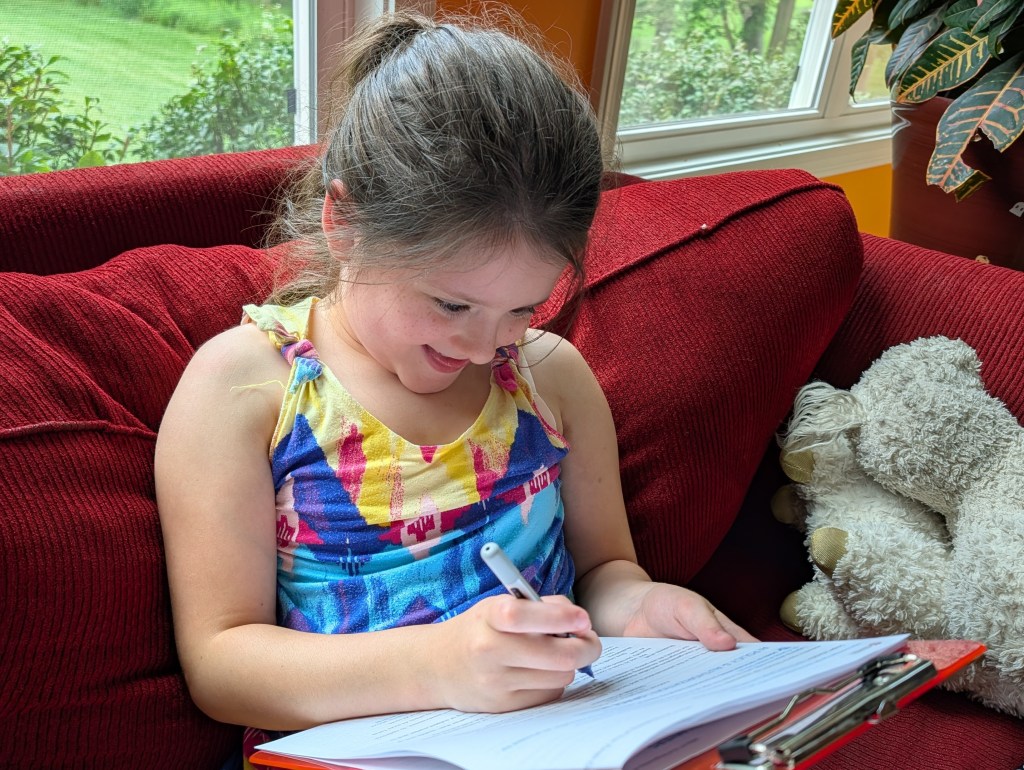
The school year has begun. The start of a new year comes with fun moments like getting fresh new school supplies and picking out a new lunch box or backpack. For parents, the start a new school year also comes with a gazillion forms to fill out. Emergency contacts, tuition payment plans, behavior contracts, aftercare registration… The list goes on. Many of the forms end with a signature. I spent a little time reflecting on a couple of forms which also required my daughters’ signatures. There was a form saying that we agreed to abide by the rules in the school handbook and a form saying we agreed to care for the school’s devices that my daughters would use during the year. Both parents and children were required to sign these forms.
As parents, there are things that we take for granted that we need to teach our children. An example is the meaning of a signature. We sign so many forms, documents, and checks, but we probably don’t often stop to think about what it actually means to scribble our name on a line at the bottom of a form. Sometimes there is an explanation above the signature line. It usually either says, in some precise legal jargon, that we believe everything above on the form is true to the best of our knowledge, or that we agree to act on or live by the terms set forth in the document. As I was filling out forms at the start of the school year and asking my daughter to sign her name, I realized that it did not do much good if I simply asked her to practice her new cursive skills by writing her name if I didn’t explain what it meant for her to do so. As I handed her the forms, I explained what the form said and what it meant for her to write her name at the bottom of the form.
There are a myriad of these small teaching moments in our homes. Sometimes we think about them and plan them, other times they come up randomly without much notice. In our domestic churches, parents should put just as much thought, if not more thought, into explaining the meaning of simple things we take for granted in our faith. One of those things is the meaning of the word “amen”. It’s one of those words we say over and over and over, and probably most of them we don’t give a lot of thought to what it means for us to utter the phrase at the end of a prayer.
When we’re sitting at the dinner table, eagerly awaiting the feast set before us, and we pause to pray, what does it mean when we say “amen” at the end of the prayer? When we make the sign of the cross, why do we conclude by saying “amen”? When the priest concludes the Eucharistic prayer, we even sing the word “amen” repeatedly. What does it mean?
I recently heard a podcast that asserted that signing your signature on a document is a great metaphor for saying “amen”. Just like signing your signature can mean that you believe everything above on the form is true to the best of our knowledge, saying “amen” is a statement that you believe what came before it to be true. Just as signing your signature can mean that you we agree to act on or live by the terms set forth in the document, saying “amen” proclaims that we intend to live our lives in accordance with the beliefs stated before the “amen”. Just as we take time to prepare our children for a new year of school, in our domestic churches we should take time to explain these simple acts of faith to our children as well. Amen!





Leave a Reply